

Last updated: 21 ก.พ. 2569 | 597 จำนวนผู้เข้าชม |

หลุมสิวลึกที่มีพังผืดสีขาว (Fibrosis/ Fibrotic white scar) สาเหตุและการดูแลรักษา
ปัญหาหลุมสิวลึกและพังผืดสีขาว (Fibrotic scar): สาเหตุและการรักษาด้วยเทคนิคผสมผสาน
ปัญหาหลุมสิวที่มีความรุนแรงมักทิ้งร่องรอยที่รักษาได้ยาก โดยเฉพาะลักษณะก้นหลุมที่เป็น "พังผืดสีขาว" (Fibrosis) ซึ่งแตกต่างจากหลุมสิวทั่วไป
พังผืดสีขาว Fibrotic White Scar ที่ก้นหลุมสิวคืออะไร?
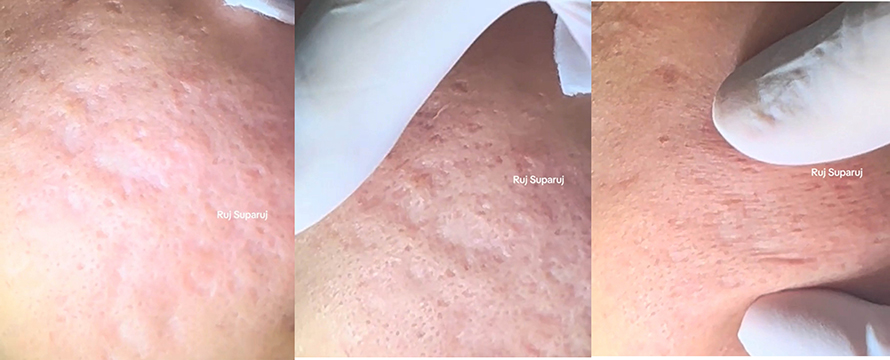
โดยปกติแล้ว ก้นหลุมสิวจะมีลักษณะสีผิวที่ดูใกล้เคียงกับผิวปกติ แต่ในกรณีที่เป็นหลุมสิวรุนแรง จะสังเกตเห็นเนื้อเยื่อบริเวณก้นหลุมเป็น สีขาวซีด ไม่เห็นรูขุมขน ซึ่งก็คือ "พังผืด" หรือ Fibrosis/ Fibrotic scar
สาเหตุหลัก: เกิดจากการอักเสบของสิวที่รุนแรงและลึกลงไปถึงชั้นหนังแท้ จนร่างกายสร้างเนื้อเยื่อพังผืด Fibrosis ขึ้นมาทดแทนเนื้อผิวเดิมทั้งหมด
ความท้าทายในการรักษา
หลุมสิวประเภทนี้มีความยากในการรักษามากกว่าปกติ เนื่องจากเนื้อเยื่อที่เป็นพังผืดมีความเหนียวและแข็งตัว การใช้เพียงวิธีใดวิธีหนึ่งอาจไม่เพียงพอ จึงจำเป็นต้องใช้ "เทคนิคผสมผสาน" (Combination Therapy) เพื่อผลลัพธ์ที่มีประสิทธิภาพ
แนวทางการรักษาและเทคนิคที่ใช้
ขั้นตอนการรักษาที่สำคัญ ดังนี้:
1. การตัดพังผืด (Subcision): เพื่อเซาะและคลายตัวพังผืดที่ยึดเกาะก้นหลุมไว้ ให้หลุมสิวค่อยๆ ตื้นตัวขึ้นมา
2. การปรับสภาพผิว และกระตุ้นการสร้างคอลลาเจน ด้วยเลเซอร์ (Resurfacing & Laser):
•Program Discovery Pico Laser หรือ Fractional CO2 Laser: ช่วยเกลี่ยบริเวณขอบหลุมและกระตุ้นการสร้างคอลลาเจนใหม่
•Program Fractional RF Microneedle: เช่น Program SylfirmX Plus การใช้เข็มพลังงานคลื่นวิทยุเพื่อกระตุ้นการซ่อมแซมจากภายใน
•เทคนิค Deep Focus Ablative Laser: ใช้สำหรับเกลี่ยขอบหลุมให้เรียบเนียนขึ้น
•เทคนิค Pinhole Laser หรือ Coring Laser ช่วยลด ขนาดพื้นที่ของเนื้อพังผืด
3. การใช้สารสกัดเพื่อฟื้นฟูผิว (Skin Boosters & Biostimulators): เนื่องจากเนื้อเยื่อพังผืดรุนแรง Fibrotic scar มักจะตอบสนองต่อการรักษาค่อนข้างยาก เพื่อช่วยให้กระบวนการซ่อมแซมเนื้อเยื่อดีขึ้น หมอจะใช้กลุ่ม PN (Polynucleotide), HA (Hyaluronic Acid), Bio-remodeling, Skin Boosters หรือ โปรแกรม Exosomes เข้าไปช่วยฟื้นฟูสภาพผิวร่วมด้วย
4. เทคนิคพิเศษอื่นๆ: เช่น การใช้ Pinhole Laser Technique เพื่อลดขนาดพื้นที่หน้าตัดของแผลเป็นสีขาวให้เล็กลง
บทสรุป
การรักษาหลุมสิวที่มีพังผืดสีขาว Fibrosis/ Fibrotic white Scar ต้องอาศัยความเชี่ยวชาญและการวางแผนการรักษาที่ซับซ้อน แม้จะรักษาได้ยากแต่หากใช้เทคนิคที่ถูกต้องทั้งการตัดพังผืด การทำเลเซอร์ และการเติมสารบำรุงผิว
Deep Acne Scars with White Fibrosis (Fibrotic White Scar): Causes and Treatment Options
Severe Deep Acne Scars with Fibrotic White Tissue: Causes and Combination Treatment Approaches
Severe acne scars often leave behind long-lasting skin damage that is difficult to treat. One of the most challenging types is deep acne scars with a “white scar base,” also known as fibrosis or fibrotic white scar, which differs significantly from typical acne scars.
What Is a Fibrotic White Scar at the Base of Deep Acne Scars?
Normally, the base of an acne scar has a skin tone similar to the surrounding normal skin. However, in severe cases, the scar base appears pale white, lacks visible pores, and often looks smoother but more rigid. This white tissue represents fibrosis, also referred to as a fibrotic white scar.
Main Cause
This condition is primarily caused by severe and deep acne inflammation that extends into the dermis, leading to destruction of normal skin structures. During the healing process, the body replaces the damaged tissue with dense fibrotic scar tissue (fibrosis) instead of regenerating normal healthy skin.
Why Is This Type of Acne Scar Difficult to Treat?
Fibrotic acne scars are more difficult to manage than typical acne scars because the fibrotic tissue is usually thick, dense, stiff, and strongly tethered to deeper layers of the skin. As a result, using only one treatment method is often insufficient.
Therefore, the most effective approach usually requires Combination Therapy, which targets multiple layers of scar tissue and stimulates comprehensive collagen remodeling.
Treatment Strategies and Combination Techniques
To achieve optimal improvement, treatment usually involves several key steps:
1. Subcision (Fibrotic Band Release)
Subcision is one of the most essential techniques for treating fibrotic acne scars. It works by mechanically releasing the fibrotic strands tethering the scar base.
This helps:
• loosen the scar adhesions
• improve scar elevation
• gradually make deep scars appear shallower
2. Resurfacing and Collagen Stimulation with Laser-Based Treatments
Laser and energy-based procedures play an important role in improving scar texture, smoothing scar edges, and stimulating new collagen formation.
Commonly used techniques include:
• Program Discovery Pico Laser or Fractional CO₂ Laser
These treatments help resurface the skin, blend scar borders, and promote collagen regeneration.
• Fractional RF Microneedling
For example, Program Sylfirm X Plus, which delivers radiofrequency energy through microneedles to stimulate deep dermal remodeling and tissue repair.
• Deep Focus Ablative Laser
A technique designed to specifically target deeper scar edges and improve surface irregularities.
• Pinhole Laser / Coring Laser Techniques
These methods can help reduce the size of the fibrotic white scar area by creating microchannels and shrinking the scar tissue footprint.
3. Skin Boosters and Biostimulators for Tissue Regeneration
Because fibrotic scars often respond poorly to standard treatments, physicians may combine energy-based procedures with injectable regenerative therapies to enhance healing and collagen rebuilding.
Common options include:
• Polynucleotides (PN)
• Hyaluronic Acid (HA)
• Bio-remodeling injectables
• Skin boosters
• Program Exosome
These adjunctive treatments support tissue regeneration, improve skin quality, and enhance the overall response to laser and subcision procedures.
.
4. Additional Specialized Techniques
In selected cases, specialized methods such as the Pinhole Laser Technique may be used to reduce the cross-sectional area of the fibrotic white scar, making the scar tissue smaller and less visible.
.
Conclusion
Treating deep acne scars with white fibrotic scar tissue (fibrosis / fibrotic white scars) requires advanced expertise and a carefully structured treatment plan. Although this type of acne scar is more difficult to improve than typical scars, significant results can still be achieved through an appropriate combination of:
• Subcision
• Laser resurfacing and energy-based treatments
• Collagen stimulation techniques
• Skin boosters and regenerative therapies
With the right combination approach, skin texture and scar depth can gradually improve, leading to smoother and healthier-looking skin.
ตัวอย่างรีวิว
https://youtube.com/shorts/ld4zkIfnDfA?si=-wxNKOpanqYOFUvp
....

....
ปรึกษาคุณหมอหรือสอบถามเพิ่มเติมได้ที่
Tel : 063-959-4392
Line: http://line.me/ti/p/@Demedclinic
Line: @Demedclinic
Wechat/Whatsapp: Demedclinic
IG: https://www.instagram.com/drsuparuj
FB: www.facebook.com/drsuparuj
Youtube: https://bit.ly/3p20YLE
Blockdit: https://bit.ly/3d8vYr1
TikTok : https://vt.tiktok.com/ZSJ141Mdf/
X.com : https://mobile.twitter.com/drruj1
Lemon8 : https://s.lemon8-app.com/s/GgUZYhfpSs
www.demedclinic.com / www.demedhaircenter.com


