

Last updated: 20 มี.ค. 2569 | 476 จำนวนผู้เข้าชม |

ผลลัพธ์อาจแตกต่างกันไป แล้วแต่บุคคล
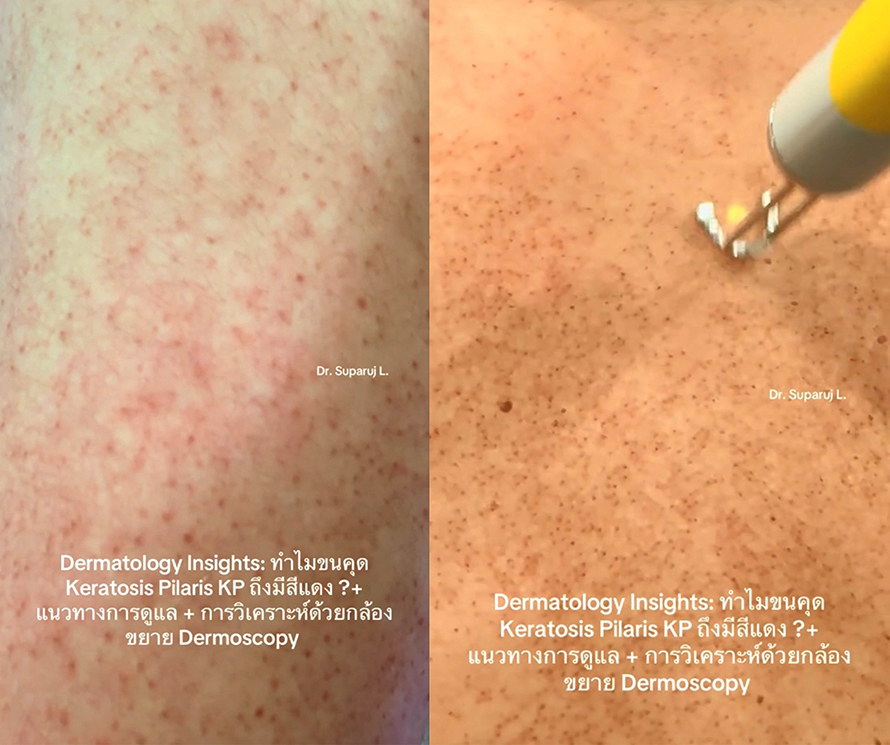
"ทำไมขนคุด Keratosis Pilaris (KP) ถึงมีสีแดง? + แนวทางการดูแล + วิเคราะห์ผิวกล้องส่องขยาย Dermoscopy " วันนี้หมอจะพามาวิเคราะห์ด้วยกล้องขยายผิวหนังหรือ Dermoscopy กันครับ
หลาย ๆ ท่านที่มีปัญหาขนคุด นอกจากจะเป็นตุ่มนูน ๆ สาก ๆ เหมือนหนังไก่แล้วเนี่ย ปัญหาที่พบบ่อยมาก ๆ เลยคือ 'รอยแดง' ครับ ซึ่งบางคนเนี่ยแดงเด่นมากจนดูเหมือนเป็นผื่นแพ้ หรือว่าเป็นสิวอักเสบเลยนะครับ
สาเหตุที่ขนคุดมีรอยแดงเนี่ย เกิดจากปัจจัยหลัก ๆ 3 อย่างครับ:
1. การอักเสบ (Perifollicular Inflammation): คือรอบ ๆ รูขุมขนที่มีการอุดตันของเคราตินเนี่ย ร่างกายจะมองว่าเป็นสิ่งแปลกปลอม ทำให้เกิดกระบวนการอักเสบขึ้นรอบ ๆ รูขุมขนนั้นครับ
2. เส้นเลือดฝอยขยายตัว (Telangiectasia): พอมีการอักเสบเรื้อรังเนี่ย เส้นเลือดฝอยบริเวณรอบรูขุมขนก็จะมีการขยายตัวขึ้น ทำให้เราเห็นเป็นปื้นสีแดงหรือจุดแดง ๆ ชัดเจนครับ
3. เกราะป้องกันผิวอ่อนแอ (Skin Barrier Dysfunction): ผิวบริเวณที่เป็นขนคุดมักจะแห้งมาก พอผิวแห้งเนี่ยรอยแดงก็จะยิ่งเห็นชัดและเห่อระคายเคืองได้ง่ายขึ้นครับ
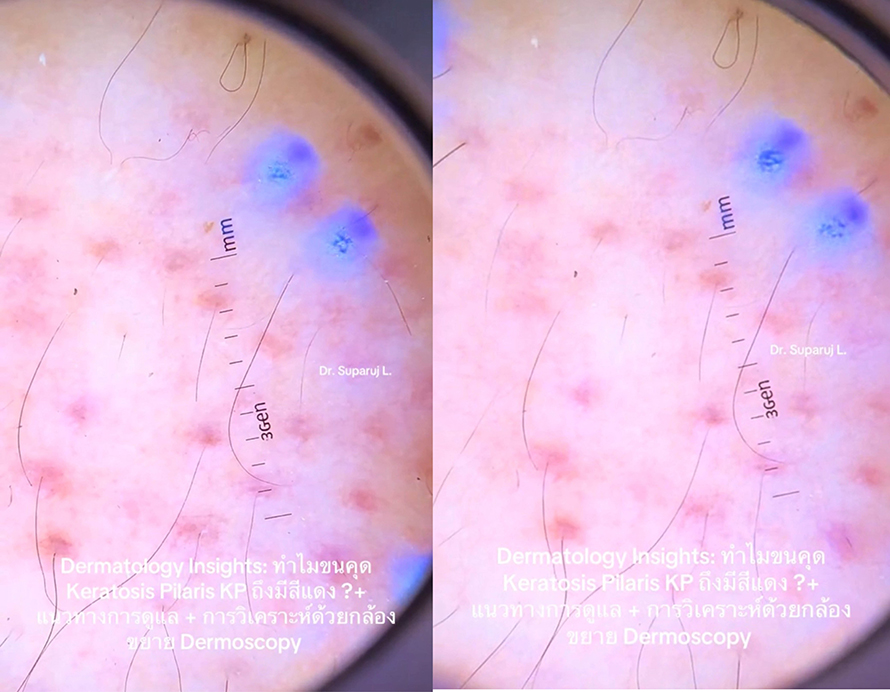
มาดูลักษณะจากกล้อง Dermoscopy กันครับ:
* จะเห็นชัดเลยนะครับว่าเป็น Keratin Plug คือมีจุกสีขาว ๆ อุดอยู่ที่ปากรูขุมขน
* และที่เห็นเป็นวงสีชมพูแดง ๆ ล้อมรอบเนี่ย คือ Perifollicular Erythema หรือการอักเสบและเส้นเลือดขยายตัวรอบรูขุมขนครับ
* บางจุดจะเห็น Coiled Hair คือเส้นขนที่ม้วนขดอยู่ข้างใน ไม่สามารถแทงทะลุจุกเคราตินออกมาได้ ยิ่งทำให้เกิดการระคายเคืองซ้ำซ้อนครับ
แนวทางการดูแลรักษาที่หมอแนะนำ:
* เน้นความชุ่มชื้น: การทามอยเจอไรเซอร์เข้มข้นที่มีส่วนผสมของ Urea หรือ Lactic Acid เพื่อช่วยผลัดเซลล์ผิวอย่างอ่อนโยนและเติมน้ำให้ผิวครับ
* การผลัดเซลล์ผิว กลไกการทำงานของการผลัดเซลล์ผิว ละลาย Keratin Plug: ใช้สารกลุ่ม Keratolytic (เช่น Salicylic Acid หรือ Lactic Acid) เข้าไปสลายโปรตีนเคราตินที่แข็งตัว ซึ่งอุดตันอยู่ที่ปากรูขุมข เปิดทางให้เส้นขน: เมื่อจุกเคราตินหลุดออก เส้นขนที่ขดอยู่ข้างใน (Coiled Hair) จะสามารถงอกออกมาได้ตามปกติ ลดการเกิดตุ่มนูนสาก
* การใช้เลเซอร์: หากรอยแดงเด่นมาก หมอจะแนะนำกลุ่ม Vascular Laser หรือเลเซอร์ที่จำเพาะต่อเส้นเลือด เช่น Long Pulsed Nd:YAG หรือกลุ่ม Pulsed Dye Laser เพื่อไปลดการขยายตัวของเส้นเลือดฝอยครับ
* Pico Laser: ในกรณีที่ต้องการปรับสภาพผิวให้เรียบเนียนและลดรอยแดงรอยดำร่วมด้วย เทคนิคนี้ก็จะช่วยได้ดีมากครับ
คำแนะนำ ครีมบำรุงและมอยเจอไรเซอร์ สำหรับปัญหาขนคุด (Keratosis Pilaris)
1. ส่วนผสมหลักที่แนะนำ (Key Ingredients)
คุณหมอระบุว่ามอยเจอไรเซอร์ที่ใช้ควรมีคุณสมบัติ "2 in 1" คือทั้ง ให้ความชุ่มชื้น และ ช่วยผลัดเซลล์ผิวอย่างอ่อนโยน โดยส่วนผสมที่โดดเด่นคือ:
• Urea: ช่วยละลายเคราติน (Keratinolytic agent) ที่แข็งตัวอุดตันรูขุมขนให้ซอฟต์ลง และดึงน้ำกักเก็บไว้ในผิว
• Lactic Acid / Salicylic Acid: ช่วยผลัดเซลล์ผิวชั้นบนที่ตายแล้วให้หลุดออก ลดลักษณะตุ่มสากเหมือนหนังไก่
• Ceramides / Emollients: เพื่อฟื้นฟูเกราะป้องกันผิว (Skin Barrier) ไม่ให้ผิวสูญเสียน้ำ ซึ่งเป็นตัวการสำคัญที่ทำให้ขนคุดอักเสบแดงง่ายขึ้น
2. เทคนิคการทาและการดูแล (Application Techniques)
• ทาทันทีหลังอาบน้ำ: คุณหมอแนะนำให้ทามอยเจอไรเซอร์ในช่วงที่ผิวพึ่งซับหมาด ๆ เพื่อให้เนื้อครีมซึมเข้าสู่ผิวได้ดีที่สุดและกักเก็บความชื้นได้สูงสุด
• ความต่อเนื่องคือหัวใจ: ขนคุดเป็นลักษณะทางพันธุกรรมอย่างหนึ่ง การทาครีมจึงต้องทำอย่างสม่ำเสมอ "ต่อเนื่อง" แม้อาการจะดีขึ้นแล้ว หากหยุดทา ผิวที่กลับมาแห้งจะทำให้เคราตินกลับมาสะสมและอุดตันได้ใหม่
• เลี่ยงปัจจัยกระตุ้นความแห้ง: ในคลิปมีการพูดถึงการหลีกเลี่ยงการอาบน้ำอุ่นจัด หรือการใช้สบู่ที่มีค่า pH สูงที่ชะล้างไขมันตามธรรมชาติออกมากเกินไป เพราะจะทำให้ครีมที่ทาไปได้ผลน้อยลง
3. ข้อควรระวังพิเศษ (Precautions)
• อย่าผลัดเซลล์ผิวแรงเกินไป: คุณหมอเตือนว่าการใช้ครีมที่มีความเข้มข้นของกรดผลไม้สูงเกินไป หรือทาบ่อยเกินไป (เช่น ทาทุกวันในคนผิวบาง) อาจทำให้เกิดการระคายเคือง จนผิว "แห้ง แดง ลอก" ซึ่งจะกลายเป็นตัวกระตุ้นให้ขนคุดเห่อรุนแรงกว่าเดิม (Rebound effect)
• การเลือกเนื้อสัมผัส: สำหรับบริเวณที่มีรอยแดงมาก (KP Rubra) ควรเลือกสูตรที่เน้นการปลอบประโลมผิว (Soothing) และไม่มีน้ำหอมหรือสารที่ก่อให้เกิดการแพ้ เพื่อลดโอกาสการขยายตัวของเส้นเลือดฝอยรอบรูขุมขนครับ
ข้อควรระวังสำคัญเลยนะครับ:
'ห้ามแกะ ห้ามเกา และห้ามสครับผิวแรง ๆ' เด็ดขาดครับ เพราะการรบกวนผิวจะยิ่งไปกระตุ้นให้เส้นเลือดอักเสบมากขึ้น และจะกลายเป็นรอยดำรอยแดงฝังลึกที่รักษายากกว่าเดิมครับ"
ผลการรักษาขึ้นอยู่กับการตอบสนองของแต่ละบุคคลครับ
Why Does Keratosis Pilaris (KP) Appear Red?
+ Management Approach + Dermoscopic Analysis
Today, we will analyze Keratosis Pilaris (KP) using dermoscopy.
Many patients with KP not only present with rough, follicular papules resembling “chicken skin,” but also commonly experience prominent redness. In some cases, the erythema can be so marked that it resembles allergic dermatitis or inflammatory acne.
Pathophysiology of Redness in KP
The redness in KP is primarily driven by three key factors:
1. Perifollicular Inflammation
Keratin plugs obstruct the follicular openings, and the body recognizes this as a foreign process, triggering an inflammatory response around the hair follicle.
2. Telangiectasia
Chronic inflammation leads to dilatation of superficial capillaries, resulting in visible erythematous patches or red dots.
3. Skin Barrier Dysfunction
KP-affected skin is typically very dry, which enhances erythema and sensitivity, making the skin more prone to irritation.
Dermoscopic Findings
Under dermoscopy, the following features are commonly observed:
• Keratin plugs: White plugs occluding follicular openings
• Perifollicular erythema: Pink-to-red halos surrounding follicles due to inflammation and vascular dilation
• Coiled hair: Entrapped, twisted hairs unable to penetrate through the keratin plug, contributing to persistent irritation
Management Strategies
1. Skin Hydration (Cornerstone)
Use intensive moisturizers with dual functions: hydration + gentle exfoliation
• Urea: Keratolytic + humectant (softens keratin and retains moisture)
• Lactic Acid / Salicylic Acid: Promote gentle exfoliation and reduce rough texture
2. Keratolytic Mechanism
• Dissolves hardened keratin plugs
• Reopens follicular orifices
• Allows trapped (coiled) hairs to grow outward normally
→ Reduces follicular elevation and roughness
3. Laser-Based Treatment
For prominent redness:
• Vascular lasers (e.g., Long-pulsed Nd:YAG, Pulsed Dye Laser)
→ Target dilated capillaries and reduce erythema
• Picosecond laser
→ Improves skin texture, reduces both erythema and pigmentation
Skincare Recommendations for KP
Key Ingredients (2-in-1 concept: hydration + exfoliation)
• Urea → keratin softening + hydration
• Lactic Acid / Salicylic Acid → exfoliation
• Ceramides / Emollients → restore skin barrier
Application Techniques
• Apply immediately after showering (on slightly damp skin) for optimal absorption
• Maintain consistent, long-term use (KP is a chronic/genetic condition)
• Avoid triggers of dryness:
• Hot showers
• Harsh, high-pH soaps
Precautions
• Avoid over-exfoliation
→ High acid concentration or excessive frequency may cause irritation, dryness, and rebound inflammation
• Choose soothing formulations for KP rubra
→ Fragrance-free, non-irritating products to minimize vascular reactivity
Important Advice
Avoid picking, scratching, or aggressive scrubbing.
These actions exacerbate inflammation, increase vascular dilation, and may lead to persistent post-inflammatory erythema or hyperpigmentation, which are more difficult to treat.
Clinical Note
Treatment outcomes vary depending on individual response and require consistent, multimodal management.
ขนคุด ,รักษาขนคุด,keratosispilaris ,เลเซอร์ขนคุด ,dr.suparuj
คลิปรีวิวการรักษา
https://youtu.be/ZyiCC-BVD64?si=hEwtXqgRXtsIUgw5

.....
ปรึกษาคุณหมอหรือสอบถามเพิ่มเติมได้ที่
Tel : 063-959-4392
Line: http://line.me/ti/p/@Demedclinic
Line: @Demedclinic
Wechat/Whatsapp: Demedclinic
IG: https://www.instagram.com/drsuparuj
FB: www.facebook.com/drsuparuj
Youtube: https://bit.ly/3p20YLE
Blockdit: https://bit.ly/3d8vYr1
TikTok : https://vt.tiktok.com/ZSJ141Mdf/
X.com : https://mobile.twitter.com/drruj1
Lemon8 : https://s.lemon8-app.com/s/GgUZYhfpSs
www.demedclinic.com / www.demedhaircenter.com


28 ก.ค. 2569


